DfAM and manufacturability screen
Geometry is reviewed for consolidation, lattice reduction, heat flow, support removal, post-machining stock, and the point where conventional machining is still the lower-risk route.
Tungaloy does not treat a tooling request as a shopping cart line. The service path begins with the manufacturing problem: an insert does not hold edge life, a boring bar needs reach without chatter, a fixture is too heavy for a cell, or a prototype program needs to become repeatable without losing the design freedom that made it useful. The team reviews CAD data, material, tolerance, annual volume, machine envelope, surface requirements, and inspection evidence before recommending a conventional tool, an additive preform, a finish-machined fixture, or a broader machinery package.
Discuss service scopeEach pillar can stand alone, yet the strongest programs connect them. A DfAM review without metrology becomes a concept; a holder selection without process notes becomes another catalog guess. Tungaloy keeps the buyer, manufacturing engineer, quality engineer, and supplier manager in the same decision record.
Geometry is reviewed for consolidation, lattice reduction, heat flow, support removal, post-machining stock, and the point where conventional machining is still the lower-risk route.
Cutting forces, reach, insert access, coolant, bore depth, and machine envelope are mapped to holder configuration, milling approach, and turning stability.
Early builds are organized with revision control, material notes, finishing steps, and acceptance criteria so the program can move beyond a successful sample.
FAI, CMM checks, surface roughness, material certificates, and supplier qualification records are aligned before the part reaches receiving inspection.
Use these as program-scale signals for this web build. Contract claims should be checked against the current QMS record, active supplier list, and project-specific capacity statement.
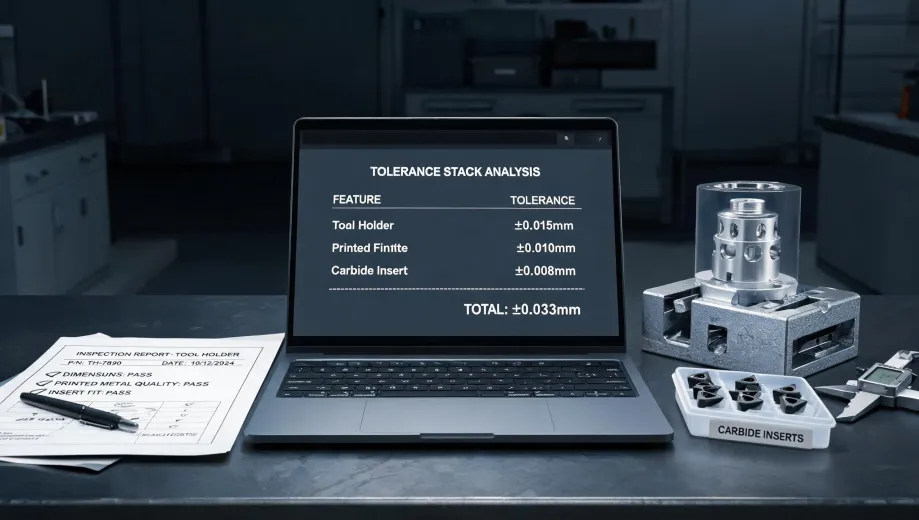
A useful service request includes material, machine, tolerance, annual volume, target date, inspection level, and what failed in the prior approach. With that context, the team can separate quick catalog fit from engineered tooling work and document why the recommendation is credible.
Send constraints