Tungaloy Milling vs. Alternatives: End Mills for Hardened Steel, Laser vs. CNC, and What's Actually Dangerous
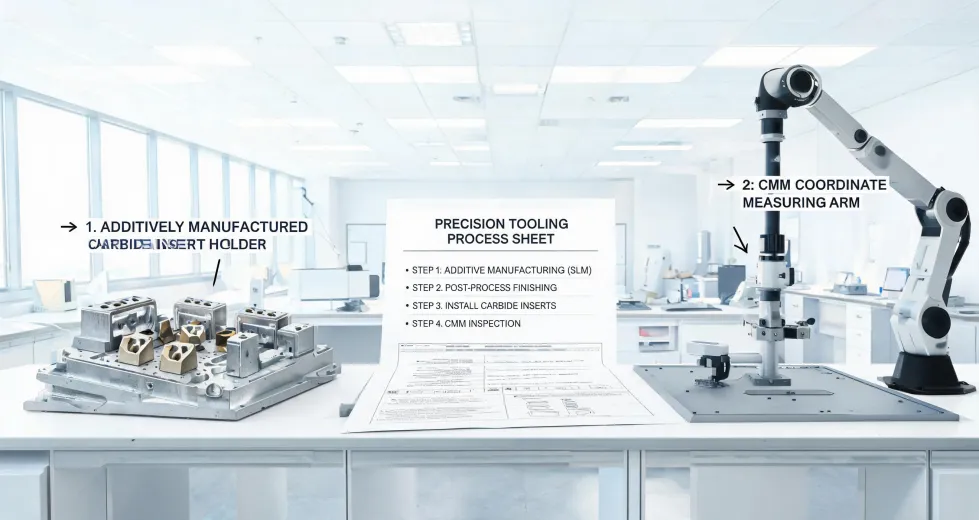
When I took over tooling purchasing for our manufacturing shop in 2021, I assumed the job was simple: find the right tool, get the best price, order it. Three years and 300+ orders later, I can tell you it's not that straightforward—especially when the work involves hardened steel and your machining team is split on whether to use CNC milling or laser cutting for steel sheet parts.
I'm an office administrator for a 40-person company. I manage all tooling and machining service orders—roughly $180,000 annually across nine vendors—and I report to both operations and finance. That means I care about process reliability, internal customer satisfaction, and compliance. This article compares what I've learned the hard way, in four dimensions: brand consistency, end mill selection, CNC vs. laser cutting, and safety. Think of it as a side-by-side buyer's guide from someone who isn't selling tools.
Dimension 1: Tungaloy milling tools vs. other brands
Let's address the brand question head-on. Tungaloy is a Japanese tool maker with a strong reputation in milling, but they're not the only name our engineers cycle through. We've used Sandvik, Kennametal, Iscar, Mitsubishi Materials, and a few no-name imports. Here's the comparison after all those orders.
Consistency. Tungaloy inserts and cutters have been, in my experience, the most consistent in edge geometry and coating quality. What most people don't realize is that budget brands often pass the first inspection but vary significantly across batches—which matters when you're running the same job quarterly. With Tungaloy, the performance numbers come back close every time. That predictability alone reduces troubleshooting time.
Lead time. This is where Tungaloy's distribution shows some weakness. Standard catalog items typically arrive in 3–5 business days in the U.S. Some competitors with local warehouses can ship in 48 hours. But here's something vendors won't tell you: "standard turnaround" often includes buffer time built into the vendor's production queue. It's not necessarily how long YOUR order takes. I've had Tungaloy orders show up in two days when the warehouse had stock positioned nearby.
Support. Tungaloy's application engineers actually pick up the phone. That's rarer than you'd think. When we had a vibration issue on a deep boring job last year, the rep recommended a tool holder combination that fixed it in one try. A competitor's "technical support" directed us to a PDF manual.
Total cost. Tungaloy is not the cheapest. You'll spend 10–20% more than imports for the same class of milling cutter (I priced 2-inch face mills across four brands in March 2025; the range was $380–$620). But cost per finished part—the metric that matters—comes out competitive because tool life is consistently better. We measured a 25–30% longer run time on hardened steel with Tungaloy coated grades versus a budget option we trialed in 2023.
This dimension's conclusion: Tungaloy wins on consistency and support, ties on lead time, and loses on upfront price. For our shop, that tradeoff prevents problems before they start. And if you know my role, you know I'll pay a bit more to avoid a 5-day rework loop.
Dimension 2: Best end mill for hardened steel
The question I get most from our engineers: what's the best end mill for hardened steel? The honest answer depends on the hardness range, the operation, and the machine's rigidity. But after running trials on P20 and H13 die steel (45–55 HRC), here's the comparison that matters.
- AlTiN-coated solid carbide (e.g., Tungaloy's DIAHARD series) delivered the best surface finish and predictable wear. It costs more—around $85–$120 per 10mm end mill based on distributor quotes from March 2025—but measured tool life was roughly 2.5 times longer than standard TiAlN carbide.
- Ceramic insert end mills ran 15% faster cycle times but chipped without warning. That unpredictability is a dealbreaker for unattended or lightly supervised machining. We lost a $340 part in 2023 when an insert fractured mid-pass.
- Standard TiAlN carbide is the budget pick at roughly half the cost of premium coated tools. It produces acceptable results on softer steels but struggled with the hardened workpieces—more wear, more built-up edge, and noticeably rougher finishes on long runs.
The legacy belief that "ceramic is always faster, so it's always better" comes from an era when workpieces were less standardized and spindle rigidity was a bigger factor. Today, for typical mold and die work, the AlTiN solid carbide end mill is the more reliable recommendation. If your cycle time is critical, test ceramic inserts on a small batch first. Don't trust the brochure.
Dimension 3: CNC machining vs. laser cutting machine for steel sheet
Now for the technology comparison that keeps coming up when we source steel sheet parts. Should they go to a CNC mill or a laser cutting machine?
Thickness. Under 3mm steel sheet, laser cutting is hard to beat. It's fast, clean, and requires no custom tooling. If you're pricing a laser cutting machine for steel sheet work, expect the best economics below 3mm. Above 6mm, CNC machining—or honestly, plasma cutting—makes more sense. In the 3–6mm range, it's a genuine toss-up.
Tolerance. CNC milling holds ±0.01mm routinely. Laser cutting is typically ±0.1mm on sheet. If you're making precision brackets that need to fit without rework, CNC wins. For decorative or structural parts with generous tolerances, laser is cheaper per part.
Setup economics. CNC requires fixtures, tooling, and programming—costly for one-offs. Laser requires a file and a machine, so single parts are usually more cost-effective. But for production runs of 50+ identical parts, CNC amortizes the setup and becomes the cheaper route.
Here's the counterintuitive finding: laser is not always faster. In our 2024 vendor consolidation project, we compared cycle times for a 50-piece order of 5mm steel brackets. The laser cutter—once you factored in sheet loading, cutting, unloading, and deburring—took 7 hours. The CNC mill with a simple fixture ran the batch in 5.5 hours. That's the kind of nuance that doesn't show up in the marketing materials.
Dimension 4: Is CNC machining dangerous?
This is a popular search, and I remember typing it myself in my first month (note to self: I should have asked our safety officer instead of Google). Here's the procurement-level answer.
Yes, CNC machining has real hazards. Rotating spindles, sharp inserts, flying chips, high-pressure coolant. Machine guarding and operator training are mandatory under federal workplace safety regulations for good reason. But the more common risks I see in vendor audits are the quiet ones: noise exposure, repetitive handling of sharp tools, and reaching into a machine while the spindle is still coasting.
Laser cutting has a different risk profile. Fumes require proper exhaust, and Class 4 lasers can damage eyes from reflections off shiny steel. One is not inherently "safer" than the other—they just fail differently.
The "CNC is dangerous" narrative comes from a pre-digital era when operators had to work physically closer to the machine. Modern CNC enclosures and interlocked doors have dramatically changed the risk. Per FTC advertising guidelines (ftc.gov), safety and performance claims must be truthful and substantiated—so when a vendor says their machine is "operator safe," they should have data to back it up.
The most dangerous moments in our shop are not the dramatic ones. It's the 10-second reach into the machine to clear a chip, or the hurry-up changeover where someone skips the guard. A 10-minute pre-flight checklist—which I created after a 2022 incident involving a plastic bin left in a machine, costing us $800 in downtime—has done more for safety than any piece of equipment.
Which way should you go?
Here's my scenario-based advice:
- Choose Tungaloy milling tools if you value consistent performance, need application engineering support, and can absorb a modest upfront premium for long-term reliability. If price is your only constraint, cheaper tools will work—just budget for variability.
- Choose AlTiN-coated solid carbide end mills for hardened steel in the 45–55 HRC range, especially for unattended or semi-automated runs. Test ceramics on a small batch if cycle time is critical, but don't rely on them for untended production.
- Choose laser cutting for steel sheet under 3mm, low quantities, or loose tolerances. Choose CNC for thicker material, tight tolerances, or repeat batches where fixturing pays off.
- Don't fear CNC—but verify your vendor. Check for real safety guards, ask about operator training, and confirm your tooling source is authorized. Counterfeit Tungaloy products with the Tungaloy logo are circulating; we caught a batch of "discounted" inserts in late 2024 that flaked within 50 parts.
Your situation will be different from ours. Run your own trials, verify current pricing, and make your own call. But at minimum, you now know the dimensions to compare—and the problems to prevent.

Ana Kovacevic
Ana Kovacevic is an independent CNC milling and five-axis machining analyst covering precision parts, machining centers, workholding, and complex surface strategies. She applies ISO 1101 geometrical tolerancing while examining datum schemes, tool reach, setup count, spindle load, surface roughness, and inspection access before accepting tight requirements. Her technical guides help design and manufacturing teams improve DFM decisions, compare machine capability, and control dimensional risk from prototype through production.