Tungaloy Turning and CNC Machining Near Florence KY: A Rush Order Playbook
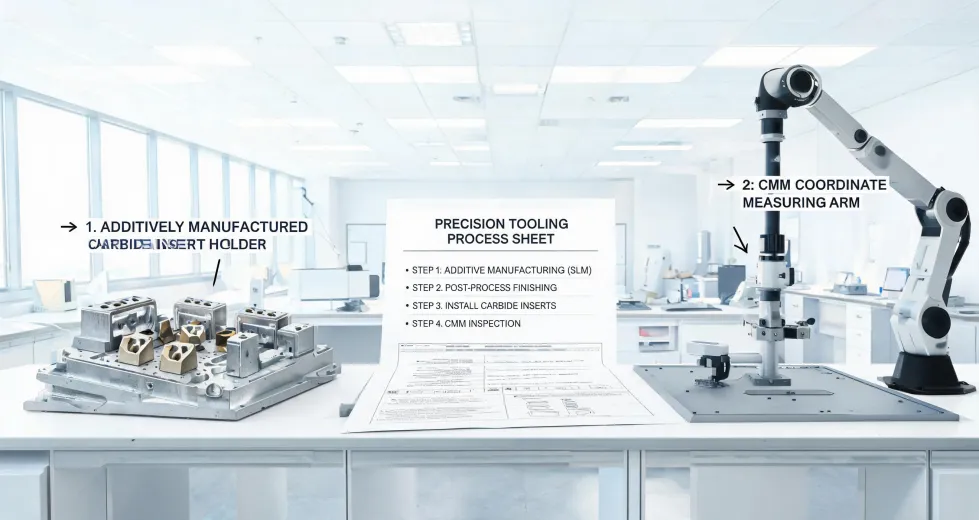
Fast CNC delivery is not a magic trick. In my shop, the difference between a rush order that ships and one that explodes usually comes down to one decision: having the right turning tool locked in before the material arrives. The fastest way to save a rush job is to choose the cutting tool before the material shows up. I've been coordinating production at a CNC machining shop near Florence KY for 12 years, and last quarter alone we processed 47 rush orders with 95% on-time delivery. The ones that missed were not the days when the machine broke. They were the days when someone tried to save twenty minutes by skipping the tooling plan.
Why I can say this with a straight face
I'm the person who answers when a customer calls at 3 PM and asks for parts by the next morning. I have mixed feelings about rush jobs. They pay the bills, but they can wreck a schedule. The twist is that a locked-in tooling plan is what keeps them from wrecking the schedule. In March 2024, a packaging line in Florence KY called about twelve turned parts needed for a Friday shutdown. Normal lead time: five days. We had 19 hours. We used a Tungaloy turning toolholder with an insert that was already in the crib, paid $350 in evening freight, and hit the deadline. The line did not stop.
The step everyone wants to skip is the spec lookup. Everything in me wants to trust the number in my head for speeds and feeds. I do not trust it anymore. I've been burned enough times that I now check the tungaloy login before quoting a rush job: insert corner radius, seat torque, shank dimensions. It takes 60 seconds. The most frustrating part of this job is that skipping that 60-second check has caused more scrap than any tool failure I can name. You'd think a machinist would learn once. The pressure of a deadline makes you do dumb things.
Tungaloy turning: the parts I actually trust
On Tungaloy turning tools, I'm not going to pretend I use the entire catalog. I'm not sure anyone uses the entire catalog. The range is enormous. What makes Tungaloy holding systems valuable in a rush shop is consistency. When a holder comes back from a difficult job and the insert pocket is still square, that consistency saves time. I've seen cheaper holders with the same shape and same nominal angles feel different from one order to the next. On a deadline, that difference is everything.
I also learned to ignore some conventional wisdom about insert grades. Everything I'd read said the newest coated grade should beat the older one in almost every operation. In practice, on our older CNC lathe with a little spindle runout, a tougher grade performed better on interrupted cuts. Lab data, like ISO 3685 tool-life tests, points one direction. Real chips point another. So now I match the grade to the real setup, not the brochure.
Why the tungaloy login is not just for distributors
If you're not registered on the Tungaloy portal, that's worth fixing. The tungaloy login gives you access to tool drawings, clamping torque specs, and spare part breakdowns, not just sales pages. I skipped this for years. Then one night I needed a boring bar drawing to confirm a shank dimension before a midnight setup. It saved me from a costly guess. The login is free for end users, as far as I know. Take that with a grain of salt because terms may have changed, but it's been true for our shop since 2023.
If you're looking for CNC machining near Florence KY
If you're searching for CNC machining near Florence KY, here's what I tell buyers: ask about the tooling crib, not just the hourly rate. A shop with a small set of holders may need to order tooling before they can quote your job. That adds two or three days you don't have. A low quote is not a low quote if it comes with a hidden lead time.
A few years ago, I nearly lost a $12,000 contract because I tried to save $800 on a custom boring setup instead of buying the right Tungaloy turning holder. The standard tool needed a workaround, the workaround ate a full day, and the customer went elsewhere. I only believed in the spend-on-tooling-first lesson after that failure. Now we keep backup inserts and verified holders for the jobs we know we'll see again. Relationship consistency beats marginal savings, in my experience.
The side quests that eat shop time
Not every problem happens on the machine. A few weeks ago, one of my guys found a laser beam welding tutorial site and thought we could repair a cracked tool holder by welding. I understand the appeal. Build-up welding is useful for fixtures, bases, and non-critical parts. But a cutting tool body is heat-treated and precision-ground. Welding changes the metallurgy and leaves a stress raiser. The tutorial will show you how to lay a bead, but it won't tell you whether the repair makes engineering sense. For a fixture base, maybe. For a boring bar, I'd say no.
How to clean a 3d printer plate before you quote a prototype
This one sounds too simple to write down, but here we are. A customer brings in a 3D-printed prototype, and the first layer didn't stick. The part is warped. The dimensions are meaningless. The answer is usually a dirty build plate. How to clean a 3d printer plate: warm water, dish soap, and a non-abrasive sponge. For most PEI plates, that's enough. Don't use acetone. I'm not 100% sure of the chemistry, but I know from experience that acetone can mess up the surface and make adhesion worse.
Why should a machining shop care about a 3D printer plate? Because prototypes are often the first step in a bigger order. If the prototype is wrong, the quote is wrong, the manufacturing plan is wrong, and the actual part may be wrong. A clean plate is a cheap way to avoid the whole chain.
When I would tell you to skip the premium tool
Here's the honest limitation. Tungaloy turning tools are excellent, but they are not magic. If your lathe has serious wear, your workholding is flexible, or your speeds and feeds are all over the place, a premium insert won't save you. Fix the machine first. I've seen a $15 insert outperform a $40 insert on the same part, simply because the setup was more rigid.
Likewise, if you're turning soft plastic or simple low-tolerance aluminum, you probably don't need an advanced cutter. Buy the tool that matches the job and the deadline. The best question is not which brand is best. It's which tool is least likely to fail under the conditions this order will see.
So before you approve overtime, express shipping, or a second shift, spend ten minutes on the tooling plan. Check the tungaloy login, verify the insert, and clean the build plate. That's where the time actually hides.

Ana Kovacevic
Ana Kovacevic is an independent CNC milling and five-axis machining analyst covering precision parts, machining centers, workholding, and complex surface strategies. She applies ISO 1101 geometrical tolerancing while examining datum schemes, tool reach, setup count, spindle load, surface roughness, and inspection access before accepting tight requirements. Her technical guides help design and manufacturing teams improve DFM decisions, compare machine capability, and control dimensional risk from prototype through production.