Tungaloy Turning and Tool Holders: What $18,000 of Mistakes Taught Me
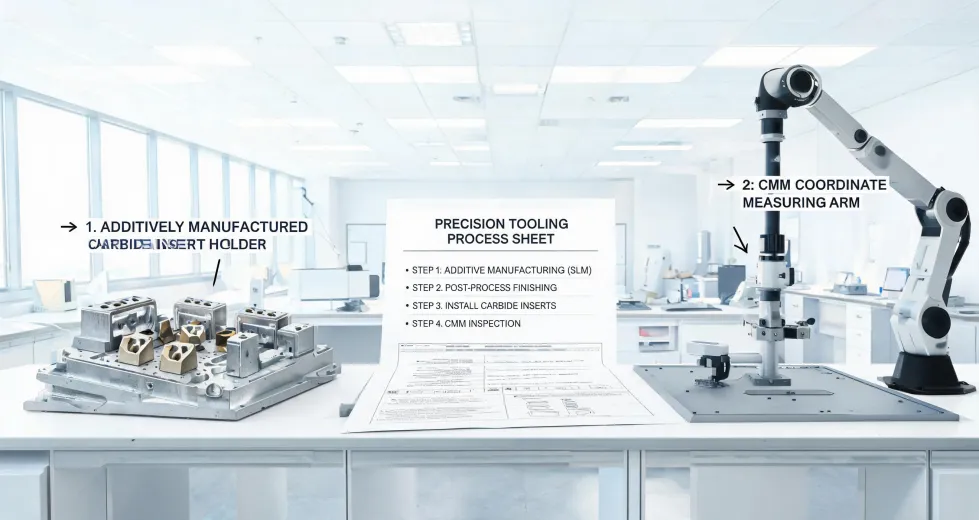
Stop pricing cutting tools like you're buying printer paper. I say that as someone who has spent nine years handling machining service orders and has personally made—and documented—14 significant mistakes, totaling roughly $18,000 in wasted budget. The bottom line is simple: a Tungaloy turning tool is only as good as the tool holder behind it, and the cheapest tool holder will usually cost you more than the premium one ever would. What I mean is, if you're comparing inserts or holders by unit price, you're already looking at the wrong number.
Why I started documenting my own mistakes
In my first year, 2017, I ordered 20 Tungaloy tool holders for a production job. I checked the catalog number, checked the price, and approved the purchase order. What I didn't check was the coolant-through orientation. The holders looked fine on my screen. They were not fine on the machine. Every insert came out with inconsistent tool life, and after 30 minutes we found that the coolant was hitting the insert from the wrong side. Twenty holders, $1,200, straight to the shelf. That was my introduction to the difference between "the part number is correct" and "the configuration is correct." That mistake cost a week of production time.
I still kick myself for the 2020 follow-up. I ordered 12 BT40 holders for a machine that actually used CAT40. The difference is the pull stud and the taper angle. I had seen the BT spec in the quote, but I didn't connect it to the spindle. $850 wasted, plus the embarrassment of watching the tooling vendor put the boxes back on the truck. After the third rejection in Q1 2024—a job with the right insert but the wrong chipbreaker—I formalized our pre-check list. Since then, we've caught 47 potential errors before they hit production.
What a Tungaloy tool holder has to do
Here's the thing most catalogs don't put on the front page: the tool holder is not a passive piece of steel. It decides how much of the spindle's stiffness reaches the cutting edge. A Tungaloy turning insert can have the perfect grade and geometry, but if the holder has excessive runout or weak clamping, the whole system performs as if the insert is wrong.
The counterintuitive part? A $300 holder with low runout can be the cheapest option you buy. A $120 holder with 0.0005" more runout will cause chatter, poor finish, and shorter insert life. That's not a guess. In September 2022, I approved a small saving on a batch of holders and watched a 150-part order turn into a $1,750 rework job because of vibration marks. The original price difference was less than the cost of one scrapped part. Never expected a little runout to make that much difference. Turns out runout is a multiplier, not a minor spec.
What the price comparison actually tells you
Most buyers focus on per-unit pricing and completely miss setup time, gauge costs, scrap, and the downtime that follows a rejected batch. The question everyone asks is "what's your best price?" The question they should ask is "what's included in that price?" I went back through our own order logs and found the same pattern: the lowest quote has cost us more in roughly 60% of the cases where we acted on it.
That's not an argument for buying the most expensive item on the shelf. It's an argument for calculating total cost per good part. For Tungaloy turning tools, the same logic applies. The insert grade, chipbreaker, corner radius, and holder all work together. Change one variable and the outcome changes.
Standards give you the vocabulary, not the answer
Tool holder interfaces are covered by standards like ISO 12164 for HSK, JIS B 6339 for BT, and ANSI/ASME B5.50 for CAT. Those documents define the taper geometry, so they're a good starting point. But they don't tell you whether a specific holder's pull stud matches your machine spindle. The standard gives you a shared vocabulary; the configuration check is still on you.
The 10-minute pre-check list
Here's the checklist I wish I'd had in 2017. It's not an engineering doctorate. It's a sanity check that takes about ten minutes for each tool assembly.
- Taper and pull stud. Is it BT, CAT, HSK, or something else? Check the spindle first.
- Coolant-through orientation. Does the holder aim the coolant at the cutting edge, or at the back of the insert?
- Insert seat. Does the insert sit flat without rocking when the screw is lightly tightened?
- Torque. Use the manufacturer's recommended torque, not "that feels tight enough."
- Runout. Measure the assembled runout at the insert pocket or nose. If you didn't measure it, you don't know it.
- Part number. Compare the full Tungaloy part number against the drawing. One changed digit can mean a different coolant angle, a different holder length, or a different hand. Treat it as a red flag until you've verified it.
This list caught 47 potential errors in 18 months. Most were small; a few would have been embarrassing. None of them cost us money. That's the point of a checklist—it turns hindsight into routine.
The same lesson outside the machine shop
Once you start looking at total cost instead of sticker price, the pattern shows up everywhere.
Take someone searching for "SLA 3D printing service UK" on Google. The quote may say £X per part, but the real cost includes support removal, post-curing, surface finishing, and the occasional failed build. The cheapest quote is only the cheapest if nothing goes wrong. That's the same hidden-cost trap I fell into with tool holders.
It also applies to a hot runner injection molding system. The mold price is one number; the hot runner's temperature control, gate balance, and sealing reliability are what determine whether the parts actually run. A system that can't hold a stable temperature profile will produce weld lines, short shots, and scrap. The cheapest hot runner can be the most expensive one to operate.
And for anyone asking "why does my brake pedal vibrate when i press it," the answer is often not the pads. It's rotor thickness variation or lateral runout. New pads will mask the symptom for a few hundred miles, but if the rotor isn't within specification, the vibration comes back. Fix the precision, not the symptom.
Where this logic doesn't apply
Honestly, there are jobs where the cheapest tooling is the right answer. If the tolerance is loose, the material is forgiving, and the part will never see a second operation, a lower-grade holder might be perfectly fine. I've done that on one-off repair jobs. The rule changes when the part has to repeat.
That said, a premium holder won't fix a worn spindle. If the machine has bearing chatter, the best tool holder in the world won't compensate. So the first step in my checklist is not the holder—it's confirming the machine itself is healthy.

Ana Kovacevic
Ana Kovacevic is an independent CNC milling and five-axis machining analyst covering precision parts, machining centers, workholding, and complex surface strategies. She applies ISO 1101 geometrical tolerancing while examining datum schemes, tool reach, setup count, spindle load, surface roughness, and inspection access before accepting tight requirements. Her technical guides help design and manufacturing teams improve DFM decisions, compare machine capability, and control dimensional risk from prototype through production.