The $22,000 Lesson That Ended Our Experiment with Cheap Milling Cutter Bits
The Report That Ruined My Thursday
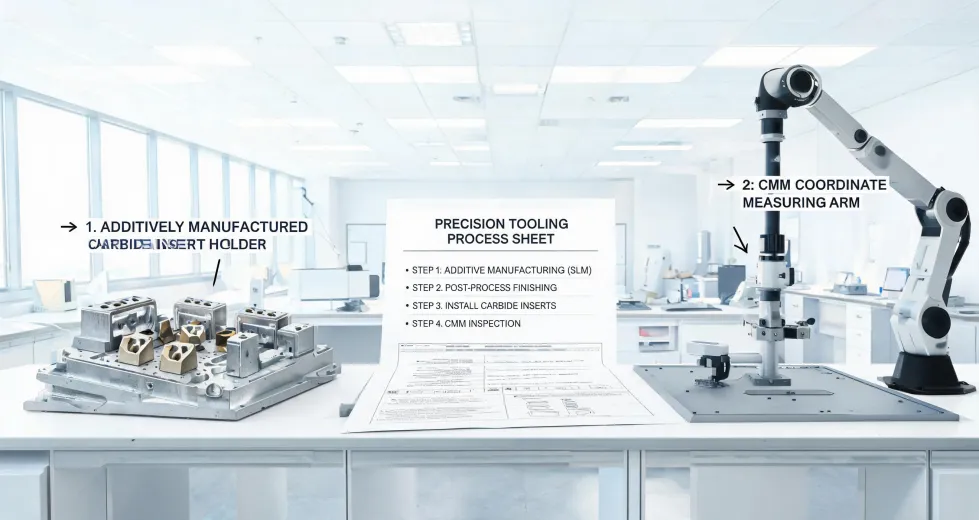
The inspection report landed in my inbox at 2:47 PM on a Thursday. I remember the time because I was about to walk out the door when the alert popped up. 2,400 parts, freshly machined by our CNC machining partner in Perth WA. The bore diameter measurements were flagged red across the CMM report. 15% out of tolerance.
Not by a little, either. We're talking 0.02mm off on a ±0.01mm spec. That's the kind of miss that makes you question the entire process—and then yourself.
How We Got Here
Here's the part that stings. We'd switched cutting tool suppliers eight months earlier—eight and a half, actually, if you count the trial order—to hit a cost reduction target. The sales rep from a discount tooling company had walked into our office with a price list that showed Tungaloy-equivalent products at 30% less. Same insert shapes. Same holder styles. Looked identical in the catalog photos.
When I first started managing our tooling budget, I assumed the lowest quote was always the best choice. That's how purchasing measured success. The spreadsheet said we were saving money. Three budget overruns later, I learned about total cost of ownership. But back then, I signed off on the switch.
The first article inspection passed. Dimensions were in spec, surface finish looked fine. I remember thinking the "you get what you pay for" warnings were overblown.
I should mention: we kept Tungaloy inserts for the roughing operations. The machine shop in Perth had insisted on that, and I didn't argue. It was the finishing operations—the boring and milling—where we'd swapped to the cheaper option.
The Problems Crept In
The problems didn't show up all at once. They snuck in. Run one: fine. Run two: a few parts nudged the upper tolerance limit, but nothing alarming. Run three: the finish started looking... different. Slightly rougher. The kind of thing you'd miss unless you were comparing parts side by side on a surface plate.
Dave, our contact at the Perth CNC shop, called it early. "Those cheaper milling cutter bits are wearing fast," he told me in May. "We're swapping inserts twice as often on the finishing pass. It's not just the cost of the inserts either—it's the setup time each time we index them."
I noted the tool life issue and moved on. The price difference seemed to more than make up for it. That turned out to be the most expensive math I've done in this job.
The June Batch Failed
Then the June batch failed inspection, and we had to figure out why.
Dave's team had a theory: the cutting geometry on the cheap cutter bits was slightly off, so the tool was rubbing instead of cutting cleanly. The heat from the rub accelerated wear, and by the end of the run, the tool was pushing the part out of tolerance instead of machining it to size.
We pulled both sets of specifications. I logged into the Tungaloy customer portal (tungaloy login) to retrieve the documentation for the BXA20 tool holder we'd used before the switch. The drawings were right there—seating tolerances, insert hold-down force, concentricity specs. Everything we needed for a proper comparison.
From the outside, it looks like one milling cutter bit is basically the same as the next. The reality is the carbide grade, the coating, and the chip geometry all change how the tool behaves in the cut. The cheap one wasn't a copy of the Tungaloy product—it was a similar shape with different engineering. (In other words, the catalog photo lies.)
The Tungaloy BXA20 tool holder had a documented runout tolerance that was half of what the cheap holder offered. The insert pocket seated the cutting edge at a consistent height through the entire cut. The cheap holder flexed more. More flex means chatter. Chatter means poor finish. That's not a theory; that's basic tooling physics.
And here's the part that made me feel like an idiot: Dave had recommended we stay with Tungaloy the whole time. He'd even offered to run a side-by-side tool life test on his machines. I said no, because the budget was already approved. Trust me on this one—machinists know their tools. They see the wear, the vibration, the chip flow every single day.
Two 3D Printers and a Parallel Lesson
While we waited for the rework, I got pulled into an unrelated conversation that turned out to be weirdly relevant. A junior engineer was looking into 3D printing custom inspection gages for our lab. He asked me, "are resin or filament 3d printers better?" because I'd been doing quality work for a while and he figured I'd have an opinion.
I did the research. The answer: neither is universally better. Resin printers give you finer detail and smoother surfaces, but the parts are more brittle and need careful post-curing. Filament printers make tougher parts that can take physical abuse, but the resolution is lower. The right answer depends on what you're actually making.
It hit me then that we'd been having the exact same conversation about cutting tools. There's no "better." There's only "better for this specific application." Resin vs. filament. Cheap vs. premium. The tool has to match the job. And the cheapest tool that actually does the job is different from the cheapest tool that exists.
What the Rework Cost
The rework took nine days. Dave's crew re-ran the entire batch with the Tungaloy BXA20 tool holder and the right insert grades. Every part passed inspection. Not a single flag on the CMM report.
Then we ran the numbers. It wasn't pretty:
- The cheap tooling had saved us $3,200 over eight months.
- The failed batch cost us $22,000 by the time we added everything up.
Here's where the $22,000 went:
- Nine days of machine time dedicated to the redo
- Overtime for Dave's team—they had to reschedule other jobs to fit us in
- The electroplating on the 360 bad parts had to be stripped and redone
- Shipping both ways between the plater and the machine shop
- Two extra inspection cycles I'd promised the production manager would be "negligible"
That $3,200 savings turned into a $22,000 problem. The unit price difference meant nothing next to the cost of reworking 2,400 parts and resetting a production schedule.
What I'd Do Differently
The vendor failure in June 2024 changed how I think about tooling. One critical deadline missed, and suddenly the premium product didn't seem expensive anymore.
If you've ever had a batch come back out of tolerance, you know the feeling. It's not just the money. It's the credibility. You walk past the shop floor and everyone knows the parts they machined are scrap because someone in an office wanted to save a few bucks on tooling.
Here's what I'd tell anyone managing a machining budget:
Do the math properly. Total cost of ownership includes the base price, the tool life, the scrap rate, the rework hours, the expedited shipping, the inspection cycles, and the cost of a batch failure if things go wrong. The lowest quote rarely wins once you add all that up.
Talk to the people running the machines. Dave knew the tools were wearing fast weeks before the batch failed. He told me. I didn't listen because the spreadsheet said otherwise. The operators and machinists see the real performance—not the catalog specs.
Respect the difference between "in stock" and "guaranteed available." When a supplier says a tool is in stock, you need to know it will actually ship when you order it. The value of certainty isn't just the speed—it's not having to re-plan your entire production schedule around a maybe.
We switched back to Tungaloy for all critical operations. The annual tooling budget went up about 20%. The scrap rate went down 11%. Non-conformance reports in the last two quarters are lower than in any full year since I've held this role.
And the 3D printers? We bought both. A filament printer for the rough fixtures that get knocked around, and a resin printer for precision gage parts. Each has its job. Neither replaces the other.
Same logic applies to cutting tools. Tungaloy isn't the right answer for every single operation—that would be a silly claim for any brand. But it's the right answer where precision and consistency are non-negotiable. And when the cost of failure is high, the cheapest option is rarely the most economical one.
The best tool isn't the cheapest one. It's the one that gets the job done repeatedly, without blowing up your week. I've got the inspection reports to prove it.

Ana Kovacevic
Ana Kovacevic is an independent CNC milling and five-axis machining analyst covering precision parts, machining centers, workholding, and complex surface strategies. She applies ISO 1101 geometrical tolerancing while examining datum schemes, tool reach, setup count, spindle load, surface roughness, and inspection access before accepting tight requirements. Her technical guides help design and manufacturing teams improve DFM decisions, compare machine capability, and control dimensional risk from prototype through production.